Tucked away in the depths of South West England lies an area , not only trying to be an appelation but also a fabulous microclimate. Perfect for the grapes of England to flourish. Perfect for an adventure to begin. In this instance the Pinot Gris grape shines in this little idyll.
What makes this wine that little bit different is that for an English wine to be approx £21 and to be an orange wine / natural wine is something of a find. Not many producers have Pinot Gris on their estate – so for Sharpham Estate/ Sandridge Barton to be growing. is very exciting indeed.
OH
and the wild ferment bit ….. Naturally occuring yeast is allowed to do its own thing of fermentation rather than the winemaker interfering – minimal intervention (a buzzword)
For those that are new to the phenomenon of orange wine, it has become the darling of the modern wine era. Once squeezed, the juice, almost spends a month on the skins before fermentation takes hold. This grabs flavour and colour and tannin (remember tannins come from skin stalks and pips and give that dry water sucking taste in the mouth) From there the winemaker can either put the juice in oak or stainless steel vats – imparting or omitting oak characteristics.
So this wine has all the charactersitics of an orange wine . Nectarine and tangerine (very important characteristics) stone fruit and pink grapefruit. On the palate the same applies with a touch of spice. The tannins are not ‘moisture sucking’ as some care has been taken to make this wine different and not obvious. this is a very uplifting, refreshing and crisp white wine.
Full marks to the winemaker.
FOOD MATCH
FISH
CRAB
Aromatic Dishes (Thai)
Also good on its own
A great pairing with fresh grilled fish, crab or as an aperitif or aromatic Asian dishes.
Find your Grape – this is a great place to start
PINOT GRIS
.
SUSTAINABILTY
WATER AND ENERGY CONSERVATION
UPTO 10 Points
10
PRESERVE ECOSYSTEMS
UPTO 10 points
10
RESPONSABILITIES TOWARDS THE PLANET
UPTO 10 Points
10
BUT SHOULD INCLUDE THESE POINTS
Water Efficiency, Soil Health & Fertilization, Pest Management, Energy Efficiency, WastWastewater Management, Transportation, Packaging and Material Sourcing
All producers have been asked throughly with regard to their practices and their responses have resulted in their marks out of 30. Sustainability is an important aspect of the life of the vineyard and the scoring system should reflect this.
If you ever take a wrong turn, somewhere in California, when you’re heading for Napa or Sonoma – have a bit of luck and hopefully you’ll end up in Paso Robles in San Luis Obispo County.
Not only is this region in the heart of the West Coast wineland’s but it is also uber trendy and relatively undiscovered globally. It produces some dangerously delicious wines and has winemakers that are doing something different. Aphoras, concrete vats, stainless steel tanks and oak barrels – they are all here. A must to visit ! No wine region has firmly grabbed my attention. If you can imagine getting slapped in the face and stopping dead in your tracks then this region is for you. The wine makes you stop what you’re doing and lets you enjoy the moment. Life stops and for a brief moment in time you are transported into a new world a new experience. Not normally on the radar of most consumers. Paso is increasingly becoming a destination for fabulous and price friendly wines.
Here in Paso Cab Franc ( the fragrant grape ) and Petit Verdot (the squid ink colour grape) seem to be king. Zinfandel and Chardonnay are the reliable family members. Plenty to be getting on with thank you!
Caelesta is owned by Brian Farrell Sir and his wife Denise – while Brian Jnr is the winemaker. Sr. can be seen zooming around on a forklift in the fall while the harvest is on whilst Denise takes over the production facilities. Brian Jnr is the composer in this orchestra – pulling everything together and ensuring everything runs smoothly. No mean feat for a 20 something individual.
Brian (left ) with GW (right )
The vineyard is located in the Templeton Gap AVA situated on an elevated densely planted hilside. This forces each plant to compete more for nutrients and water, therefore decreasing the yield for each vine and enhancing the character of each wine
Having reached the summit of the property there are far reaching views of the region and as such when the sun retreats and the air cools the night sky emerges – the heavens then show off their fabulous astral display. This is the celestial experience or Caelesta (lat.) that names the winery.
As with all embryonic producers in the early days of each vineyards existence most estates would source grapes from the surrounding area (within the region as that would foolhardy from a marketing perspective) until the vines are in a position to bear good enough quality fruit. Usually after 3 years. from 2015- 2019 that’s exactly what Brian did. Resulting in the first harvest in 2019
YEAR
Title
Varietals
AVA or local region
Approx Cost
2022
white
Chardonnay Viognier
Templeton Gap AVA
approx $40
2019
Vega
100 % Grenache
Templeton Gap AVA
approx $50
2019
parallax
42% Syrah, 32% Mourvedre, 26% Grenache (GSM)
Templeton Gap AVA
Approx $60
2019
Apogee
60% Cabernet Sauvignon, 40% Petite Sirah
Templeton Gap AVA
Approx $60
2019
Bien Nacido
100% Syrah
Central Coast
Approx $70
2018
Grenache
100% Grenache
Adelaida District
Approx $70
2018
DENNER VINEYARD
100% Syrah
Willow Creek AVA
Approx $70
Now the secret to wine is to
FIND YOUR GRAPE !
FIND YOUR CHAMPAGNE !
FIND YOUR STYLE!
It doesn’t matter how much you know or don’t know. What characteristics are in what wine. Life is a learning process. Learn what makes a Merlot, a Cab Saul, a Syrah etc. Who cares if you get the characteristics wrong only you do! Take notes and learn from your experience. If you don’t like red fruits in your wine that’s a great start. Just bear in mind red wines, on the whole, are either black or red fruits.
The wine governing body (WSET) for all wine exams breaks down all wines in nose (sniff) Palate (taste). Im sure they wouldn’t mind me highlighting this point.
Powered By EmbedPress
Hotter climates tend to have higher temperatures. When that happens grapes tend to have more sugar. All sugar turns to alcohol so expect higher alcohol levels and more noticeable fruit characteristics.
So what did I experience here (tasting reviews to follow – Sign up to my newsletter to be kept in touch with anything new )
Watch out for the interview with Brian Jr soon
in conversation with ….
Caelesta is a very passionate family – producing outstanding wines in a region that is relatively understated. All attention is on Napa and Sonoma and that’s a good thing – means Paso can just get on with their business – just like Margaret River in Australia
Here is a winery that is one to watch. Not only is this region producing grown up elegant wines it is also a region that is bursting with variety and coolness. Paso leans , inn part to the varietals of Rhone so expect to see familiar pairing of grapes. If you like Rhone wines you’ll love this AVA
Sustainability is also evident and there is a big movement to give back as much as the winery can to Mother Nature. Water reservoir is on site. Minimal waste is taken off site
There is also an embryonic Truffle farm. So lots going on here.
Always remember you can email me at jason@thegrapewizard.com or sign up to my website following the links on my homepage
REMEMBER : Its not just about me ! It’s all about the grapes !
If you are ever lucky enough to drive down the motorway in the garden of England and turn off one of many roads then I’m sure you’ll experience quaint little England. Nice neat houses, quiet country lanes and maybe even a fabled sloe gin hedge! But one such village, Tenterden, is witnessing a revolution. Here lies Chapel Down.
Ever since the popularity of English wine Chapel Down has been at the forefront of consumers minds for its approachable price and pleasant characteristics. This mini industry from the 388 Acres is operated from 4 vineyards. Kits Coty vineyard, Court Lodge Farm, Street Farm and a newly acquired parcel of land near Boxley.
Having visited the estate this month I was impressed by the operations, by the enthusiasm of the staff and by the range of wines. Far to short an article to list them all here!
Two things that are evident in the industry today is firstly all producers do not lay their wines down for investment and as a result omit a vintage ratings system. Secondly due to the nature of youthful wines and the lack of oak the wines are intentially made to be drunk young.
So for the majority of still and sparkling wines they are void of oak. Very few will venture into Grand Cru Chablis characteristics. It’s almost a cartel of an Anti –Oak movement. It’s a brave producer that goes alone in this embryonic industry. On the flip side drink them young and you sell more and you avoid storage costs on older wines. Costs are also recouped quicker. Forward thinking for an industry on the up. So not only does Chapel Down have prime vineyards in the heart of the garden of England (Kent) but it also produces a world-class range of sparkling and still wines, together with the award-winning range of Curious beers & cider.
Trade body Wine GB has said that it believes the UK industry, which includes vineyards across England and Wales, could be producing 40 million bottles of sparkling wine per year by 2040.How could you disbelieve them. 2018’s bottle production was 15.6 million bottles produced up from 5.9 million in 2017. Quite remarkable!
Because of their brand they supply Gordon Ramsay, The Royal Opera House, The London Symphony Orchestra, No 10 Downing Street and are the official sparkling wine of the Oxford & Cambridge Boat Races ….but all this talk of British wines! Why do we like it so much and why is it so popular? Look at the White Cliffs of Dover and you see chalky soils. Perfect climatic conditions with perfect soils. This combination allows vineyards to produce world-class sparkling wines and dry aromatic still white wines. Pinot Noir, Chardonnay, Pinot Blanc and Bacchus all thrive on the South Coast
Chief grape varieties at Chapel down
Chardonnay:Grown largely for sparkling wines.
Pinot Noir: The variety thrives in cool climates (UK) & produces delicate thin-skinned grapes with low tannins & an abundance of red fruit
Bacchus:England’s answer to Sauvignon Blanc. Sometimes shows punchy tropical fruit to more restrained citrus and gooseberry.
Chapel Down has its own premium of wines range :
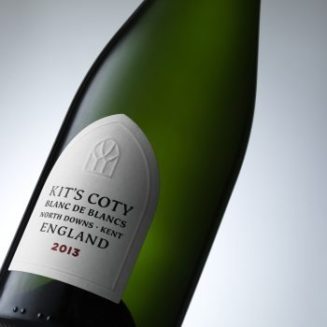
Kit’s Coty.
The Kit’s Coty vineyard has a lime-rich chalk soil and a unique microclimate on the North Downs. It is named after the monuments to the first settlers of Britain’s earliest farming society who recognised the fertility of the land in the third millennium BC. The expansive southerly aspect ensures the vines capture the sunshine all year long while free-draining chalk soils provide the perfect condition for producing well-balanced vines and intensely flavoured fruit. 3 notable examples include:
KIT’S COTY COEUR DE CUVÉE 2013. First British wine over £100.00 per bottle.
KIT’S COTY BLANC DE BLANCS 2014 Chardonnay 40.00 per bottle.
KIT’S COTY CHARDONNAY 2016 Wild-ferment Chardonnay, which has been matured in old French oak for nine months. £30.00 per bottle.
3 grape varieties tried and tested and worth recommending.
ROSE BRUT
GRAPE VARIETY 100% Pinot Noir
TASTING NOTES: Fresh strawberries, cherries and redcurrants with background notes of toasty shortbread. The palate is crisp and fresh, its fine mousse contributing to the light and effortless style.
SERVING SUGGESTION : Great as an aperitif or for pairing with light pasta dishes and summer fruit desserts.
KITS COTY BACCUS 2017
GRAPE VARIETY: 100% Bacchus
TASTING NOTES: This very ripe style of Bacchus has guava, melon and peach aromas with background oak influence. The palate is pure and focused with more tropical flavours and an exceptional length.
SERVING SUGGESTION: An ideal pairing to white crab meat salad, asparagus risotto and lightly smoked fish.
CHAPEL DOWN TENTERDEN ESTATE BACCHUS 2018
GRAPE VARIETY: 100% Bacchus
VINEYARDS : Fruit is sourced exclusively from the Tenterden vineyard, which is home to the oldest Bacchus vines producing the lowest yields but finest fruit.
TASTING NOTES: Aromas of lime zest and elderflower followed by a refreshing palate of juicy citrus fruit and a pure mineral finish.
SERVING SUGGESTION : A great match with Pork Belly or pair with a wide variety of seafood dishes. An ideal alternative to New World Sauvignon Blanc.
Music Pairing
Sometimes its not just the words that matter its the vibrancy and energy that is displayed. Still as fresh as it was all those years ago….. See where I’m going with this !
(and these two need no introduction!)
Always remember you can email me at jason@thegrapewizard.com or sign up to my website following the links on my homepage
Visiting Champagne is always a treat. The treat this time is that I also had the family in tow, a celebratory long weekend of birthdays and anniversaries. This was to be their first wine tour and our first family holiday all together since childhood. What could go wrong?
photo by Leif Carlsson
I decided that the best way for my siblings to understand the magic of this effervescent drink was for us to take in the diversity of what the region has to offer. So we based ourselves in Epernay, the regions capital in a gite at the start of the Avenue de Champagne – a famous street lined with the HQ’s of many leading champagne producers such as Moet et Chandon, Mercier and De Castellane. The trip was to include a visit to a small organic vineyard, several tours of the major well-known champagne houses and a private tasting organised by yours truly @TheGrapeWizard. But the highlight and the most anticipated was to the most admired producer in the industry, Billecart-Salmon in Mareuil-sur-Ay.
photo by Leif Carlsson
Maison Billecart-Salmon is a small-medium family-owned producer at the very top end and as you might imagine they are not able to say yes to all of the huge number of visitor requests. So it was with excitement, anticipation and a sense of awe that, like an excited herd of young billy goats, we all trotted off on our last day.
Pulling up to the house we were not disappointed; an elegant building of tan coloured stones, luxurious yet understated. Jerome, our guide for the tour, greeted us warmly. Elegantly dressed, with refined manners and a subtle galliac dry humour he had us all transfixed.
TheGrapeWizard & Jerome
History was made 200 years ago, in 1818, when Nicolas François Billecart and Elisabeth Salmon who owned a vineyard were married, marking the creation of their Champagne House. Ever since, through 7 generations, each member of the family has stayed faithful to the motto: “Give priority to quality, strive for excellence”.
Our tour started outside at the esteemed 1 hectare vineyard Clos Saint Hilaire (which is about the size of Twickenham’s rugby field).
Clos St Hilaire
A Clos is a parcel of vines enclosed by a wall on 3 sides. Whilst grapes of different vintages and vineyards are blended, a Clos Champagne is made from the grapes from a single parcel of land. There are only around 20 Clos in the Champagne region and since one vine produces only around 5 bottles of wine you understand the cost of this most rare of vintages. The vines, soil and subsoil are farmed bio-dynamically with the use of draft horses and even grazing sheep to keep the weeds down!
photo by Leif Carlsson
The Clos Saint-Hilaire creates an exceptional champagne exclusively from Pinot Noir on limited release of between 3,500 to 7,500 individually numbered bottles and only in vintage years.
The champagnes of Maison Billecart-Salmon are created thanks to the knowledge of the men who rigorously cultivate an estate of 100 hectares, across 40 crus of the Champagne region combined with a complex and thorough blending process supervised by the elderly head of the family Monsieur Antoine Roland-Billecart. The majority of the grapes used for vinification come from a radius of 20km around Epernay, where the Grand Crus of Pinot Noir, Pinot Meunier and Chardonnay co-exist, in the ethereal vineyards of the Montagne de Reims, the Vallée de la Marne and the Côte des Blancs.
The Cuverie
photo by Leif Carlsson
As part of the ever present quest to raise the quality of their champagnes, in the Fifties, the House were the first to use the technique of cold settling (normally used in the brewing industry)
The “cold settling” step involves letting the pressed juice, skins, and sometimes stems settle overnight in a vat for up to three days wherein the solids sink to the bottom. Typical temperatures for this process are between 41-50 degrees fahrenheit (5-10 Celcius). The purpose of this step is to clarify the juice to prevent off-flavors from being present in the final product. Once the suspended particles have settled, the clear juice is transferred, or racked to another vat or fermentation vessel. This is really only used for the production of whites and rosés.
combined with the use of stainless steel tanks for a longer fermentation at a lower temperature. The vinification is carried out cru by cru, grape variety by grape variety which allows for conservation of the full range of characteristics of the terroir to be captured. The low temperature encourages the most delicate ofaromas and allows all the purity of the fruit to be expressed. The elegance produced is the absolute signature of the Billicart-Salmon style.
Next on the tour was a visit to the Chais (wineries) one of which is a brand new state-of-the-art room built to celebrate Billicart’s bicentenary. They house 400 small and 24 gigantic oak casks where the wine is vinified in oak to reveal all its richness and aromatic complexity to create their latest cuvee “Sous Bois”.
The bottled wine then makes it’s way down to the chalk cellars which date from 17th and 19th centuries. Over three to four years, the non-vintage champagnes really blossom, staying around twice as long as the fixed regulations of the appellation. The vintage cuvées patiently wait ten years before they begin to reveal their maturity.
Allowing time to play its role is behind the grandeur of Billecart-Salmon champagnes.
And time now to savour the results. It did not disappoint. Tasting notes below.
If you want to learn more about Billecart-Salmon, catching up with an interview with Mathieu Roland-Billecart, the current CEO and the Chef de Caves then please go over to my website www.thegrapewizard.com. Simply sign up with your Email.
Tasting Notes
Billecart- Salmon Cuvee Elizabeth Brut Rose 2007
A salmon pink appearance with a whiff of red berries, citrus peel and stone fruits. Some would say fresh figs, white peach, almond macarons. A delight !
On the mouth a mixture of nectarine and cardamom – exposing the elegance of a tangy mandarin together with delicate flavours of cedar and exotic wood.
Pair with creamy poultry, langoustines and /or crunchy hibiscus macarons.
Serve at: 11-12°C
GW Rating 5/5
Billecart- Salmon Cuvee Louis Brut Blanc de Blanc 2006
APPEARANCE
golden yellow hue and a few green glints of youth.
PALATE
A beautifully refreshing flavours of citron zest, peach and white pepper
AROMA
whipped cream, white flowers and citrus fruits
Pair matches such as turbot or a creamy shellfish risotto. Serve at: 11-12°C
GW Rating 5/5
Billecart- Salmon Cuvee Nicolas Francois Brut 2006
APPEARANCE: yellow gold veiled in luminous golden reflections.
PALATE:honeyed notes associated with stone fruits with aromas of citrus zest.
AROMA: preserved peaches, fine apple tart and lemon verbena tea
Pair with roasted poultry or a turbot in a creamy sauce.
Serve at: 11-12°C
GW Rating 5/5
photo by Leif Carlsson
Billecart-Salmon Extra Brut
APPEARANCE
A pale gold intensity.
PALATE: biscuity flavor with notes of white flesh fruits
AROMA :dried fruits and brioche combined with floral notes. Subtle notes of lemon verbena.
TASTING: Pair with prawns, grilled scallops and ceviche.
GW Rating 4/5
As for the family dynamics and the smooth running of a 4 day getaway for the first time ever… well thats a story for another day !
Any more info wanted on Billecart-Salmon please contact me. Truly a delicious wine and a fabulous House.
I was lucky enough to be invited to the amazing Louis Roederer estate in Reims last month, late May 2018. Getting up early is never easy , but 4.30 AM is great time for the soul. No Commuters, birds tweeting, the world waking up and life just about to start for the day. Just a shame I had to walk to the Underground with my eyes shut!
No problems on the Tube and everything at Customs went quickly and efficiently. On the train, the usual business meetings are happening with lots of convivial chatter. As I take in the Kent countryside swooshing past the window, I feel a sense of jubilation. Louis Roederer has been on my radar for a while and finally I am on my way. So I begin to wonder, despite the hour, if a glass of Champagne when I am offered is in fact appropriate. I refrain this time – its still a little early. even for the GW!
It’s all thanks to Alexandra at Maisons Marques et Domaines (LR Distributor in the UK), that I am finally ticking this House off my “Tours at the Most Coveted Vineyards” bucket list.
Upon arrival I am greeted warmly by Maria at L.R. who gives me a fun-packed tour of the Headquarters and what a great experience it is! I feel like I am the kid that won the golden ticket touring the Willy Wonka factory!
It’s so great to learn more first hand about a world-class producer and especially one so respected by the industry itself. There are many producers making unadventurous, bland champagnes for the mass consumer. But LR is not one of them. LR produces special wines with distinctive characteristics. What a pleasure to be here!
Louis Roederer is now managed by the seventh generation, led by Frédéric Rouzaud and is one of very few independent, family-run Houses remaining today, producing over 3.5 million bottles and shipping to over 100 countries.
Starting out as Dubois Père & Fils in 1776, Louis Roederer inherited and renamed his Uncle’s House in 1833. In contrast to the practices of his time, Louis decided to invest in his own vines with the idea to master the end to end process of creating vintage wines. Owning his own vines gave him control of quality and led to particularly distinctive characteristics, establishing L R’s reputation as one of Champagnes best producers.
By 1876, production had reached 2.5 million bottles, 10% of total production of Champagne and exporting had begun to Russia. Viewed by many as the world’s first prestige cuvées, Cristal was in fact created at the request of Tsar Alexander II, for exclusive consumption of the Royal Household. It remained exclusive until 1945 when Cristal was first launched commercially for the rest of the world to enjoy!
Back in 1876 and as the political situation worsened, the Tsar feared assassination and requested that his Champagne was bottled in clear glass so that he could see the bubbles and prevent anyone hiding a bomb in the punt (GW note: a punt is a Champagne bottle’s characteristic bottom recess or hollow). Louis Roederer commissioned a Flemish bottle maker to create a clear lead glass Champagne bottle with a flat bottom and its why today the bottle is still wrapped individually in its now distinctive yellow cellophane to protect the wine from UV light.
From the acquisition of those first 15 hectares of vines in the Grand Cru vineyards of Verzenay in 1845, LR’s vineyards now stretch across 240 hectares or just under 600 Rugby sized pitches. All their vintage Champagne originates from these vines – 410 individual parcels of land to be precise. Their distinctive characteristics are very much a product of thr provenance of each vineyard as they are able to
choose the very best grapes from any of the 3 main areas of production depending on the success of the season.
The Montagne de Reims, The Vallée de la Marne, and The Côte des Blancs. (see below)
Their Champagne involves all 3 classic grape varieties
Chardonnay for its minerality, finesse, and elegance;
Pinot Noir adds structure, complexity and is useful for ageing;
Pinot Meunier brings harmony and softness and a hint of rustic to certain cuvées
Last but not least the WINES !
Here I’ve listed my top 4 wines from LR. There are of course more wines to the estate but the ones that stand out for me are highlighted below.
Brut Premier
The freshness, finesse, and brightness of Brut Premier makes it the perfect wine for festive occasions. Its is structured, rich and has a good length.
After the upheavals of the First World War that destroyed more than half of the LR estate, Léon Olry Roederer reconstructed the new vineyards by buying grapes externally to ensure survival of the House during this difficult period. He created multi-vintage wine with a consistent flavour, whatever the harvest year.
It is now called Brut Premier.
A blend of around 40% Pinot noir, 40% Chardonnay, and 20% Pinot Meunier. It is aged for 3 years in LR’s cellars and left for a minimum of 6 months after dégorgement (Removing frozen yeast after second fermentation in the bottle )
Louis Roederer Vintage
In my opinion, their flagship Champagne which best represents the LR terroir and the finesse, purity and precision of their wine-making skills is Louis Roederer Vintage
LR uses the structure and power of the Pinot noir grapes from the Montagne de Reims (see map) to create its Cuvée Vintage. Exposed to the north-east, the grapes mature more slowly on the vine and the character of the wine intensifies and becomes more refined through ageing – if the vines were exposed to the South East it would be perfect aspect for the grapes to grow. Hence the slowing down of the maturing process
Composed of around 70% Pinot noir and 30% Chardonnay, 30% the Vintage cuvée is generally matured on lees for 4 years and left for a minimum of 6 months after dégorgement (disgorging) to attain perfect maturity.
The palate is characteristic of LR’s vintages: a rich and winey fullness is refined by the sweetness, acidity and tight blend of the Pinot noir grapes of Verzenay. Tasting reveals sparkling suggestions of candied fruits, almond paste, toast, white chocolate, and caramel
Blanc de Blanc Vintage
This Champagne is pure and bright. Its contrasting tones range from an intense, chiselled acidity to the supple lightness of notes of fresh hazelnuts, almonds, and white flowers with accents of acacia, broom, and honeysuckle.
From 1830 onwards, the House of Louis Roederer acquired extensive knowledge of the terroirs and plot-by-plot vinification. Louis Roederer selected two exceptional Grands Crus: Mesnil-sur-Oger and Avize producing taut, highly aromatic wines that have finesse.
100% Chardonnay, the Blanc de Blancs Vintage cuvée is generally matured on lees for five years and left for a minimum of 6 months after dégorgement.
In the mouth, the attack is typically Chardonnay—it is smooth and delicate, and markedly sweet. Slightly sweetened floral notes and white fruit and dried fruit notes are combined with the almost chalky minerality of the Côte des Blancs.
The texture has notes of sugared almond, a sensation that is strengthened by a soft effervescence that envelops the mouth. This is followed by an impression of finesse, elegance, and freshness, strengthened by suggestions of fresh mint and basil.
CRISTAL
Cristal is both powerful and delicate, combining subtlety and precision.
LR’s most famous wine was created in 1876 to satisfy the demanding tastes of Tsar Alexander II. The emperor asked Louis Roederer to reserve the House’s best cuvée for him every year. To distinguish this cuvée, this exceptional champagne came in a flat-bottomed, transparent lead-crystal bottle. The new brand was named after this precious material, which is particularly transparent and luminous.
Produced uniquely during the best years, when the Chardonnay (around 40%) and Pinot noir (around 60%) grapes have attained perfect maturity, Cristal is aged for 6 years in LR’s cellars and left for a further 8 months after dégorgement.
Cristal is a remarkably balanced and refined champagne. It has a silky texture and fruity aromas, complemented by a powerful mineral quality with white fruit and citrus notes. Cristal is a wine that keeps well: it can be conserved for over twenty years without losing its freshness and character.
THE 2002 HARVEST
2002 was an extraordinary harvest, in which all the criteria for a great vintage in Champagne were met: temperatures were uniformly warm, without excess sun or heat, with a markedly mild winter and a slight shortfall of rain during the growing cycle.
If you want something special go for the top row , something more affordable is 2nd third and fourth row.
Line up of tasted Champagnes
In Bottle form !
Sadly due to last-minute events, just before I arrived the – Chef De Cave – Louis Roederer’s Jean-Baptiste Lécaillon was unable to have an interview with Me. I am still hopeful and have submitted the questions for Jean-Baptiste to answer on his return
Stay tuned for interview when it’s posted.
Below are question submitted but not answered
GW: Name one thing that you haven’t accomplished that you would like to
GW: Name one champagne other than your own which you like and why –
GW : If you were to keep a memento of your favourite bottle of Champagne – , what is the best way to remove labels from the Bottle and what would the Champagne be ( If it wasn’t one of yours)
GW : What do you think of the English and Welsh sparkling wine industry.
GW :Name one thing that scares you !
GW :Wine is so much better enjoyed if paired with music. What song/genre would you pair with
The Louis Roederer Estate of wines
GW :What are you drinking at the moment
GW:What wine would you like to try that you have’nt ,or a wine that you want to invest in?
GW:Who is the person/persons you most admire and why
GW: Whats going on in the estate in the month
And finally no GW article would be complete without a music pairing.
A delicious glass of LR Brut Premier goes very well with a spot of Keith Jarrett.
In the last 10 years hectarage of planted vines in the UK has more than doubled making wine one of the fastest growing agricultural products in the UK. Visit any supermarket and you’ll discover many increasingly impressive bottles from some of the big Estates – Nyetimber, Chapel Down and Camel Valley in Cornwall to name a few.
Interest in English wine has surged along with the rise of craft beers and locally sourced produce. Customers are increasingly interested in tasting wines from lesser-known producers but who are these new winemakers?
Hence my quest – Grape Britain – to visit everyone of the 500+ English and Welsh Vineyards
Somewhere between the M3 and the south coast sits a criss-cross of country lanes, roads so entwined you easily find yourself lost. It is here in the heart of Hampshire you will find Hattingley Valley and it sits perfectly in this idyll. It was quite a sight for a Londoner – the bare branched trees forming tunnels along the roads. It had me wondering if I was on my way to Westeros.
Simon Robinson, a former lawyer, established Hattingley Valley in 2008 with the help of Emma Rice, Founder of Custom Crush, a wine analysis laboratory. Together they have grown the vineyard into a modern, eco-friendly winery over 60 acres across two sites. Simon and Emma and their teams take pride in the quality their work and the use of the latest technology. They were the UK’s first winery to adopt solar power.
TM Michael Boudot
Ten years on, the winery has attracted a passionate and dynamic group of individuals, excited about the explosion of interest in English wines and about the prospect of working at the forefront of English wine-making.
They are separated into two distinct teams who together look after the vineyard and make the wine. The wine-making team is made up of Emma and Jacob Leadley (top photo) with help from Will Perkins (2nd Photo)
The second part of the team (vineyard team) is headed up by Lauren Merryfield (no photo) (Vineyard Manager), Roman Henrion and Tom Birkett
Everyone I spoke to was passionate about viticulture and enthusiastic to try new techniques – from new ways to provide wind and frost protection, irrigation, nutrient application and canopy management (that’s looking after every part of the vine visible above the ground).
There is a huge commitment to evaluating the Hampshire terrior and planting an experimental range of grape varieties and root stock in search of the best fruit-bearing vines.
Hattingley Valley has the potential to be one of the leading and most respected of English sparkling wines. They have already won many global awards and are a leading player in the English sparkling wine industry
The team now manages 60 acres on two well-situated sites. The vines are nurtured throughout the growing year with an environmentally sensitive approach to enhance ripeness, yield and fruit quality.
Just some of the awards Hattingley Valley has won
I was lucky therefore to have an interview with Rebecca Fisher (Marketing and Events Manager) to talk about Hattingley Valley and also put some questions forward to Jacob Leadley, wine-maker.
VISIT AND INTERVIEW TO HATTINGLEY VALLEY
16th March 2018
The GrapeWizard inaugural interview
GW. What motivated you to join the wine industry ?
JL. It’s such an exciting time to be part of the emerging English wine industry.
GW. What’s going on in the month of March? Is this month any different from any other. Has the snow caused you any problems?
JL. We are in the midst of tirage (the drawing of wine from a barrel prior to bottling). Its always very stressful, but also very rewarding, it is just great to get the wines safely into bottle then have a beer!
GW. What would you say makes the winery here at Hattingley unique?
JL. At Hattingley we have created a reputation based on quality and we work hard to maintain and improve those standards. I have been here for 7 years and have worked tirelessly to ensure we make the best possible wines every year, the wines tell all.
GW. What is the best thing about working at Hattingley?
JL. It has to be the team – we have without doubt one of the most passionate and fun-loving teams going. Coming to work and working with people so passionate is infectious.
GW.What is the one thing that scares you ?
JL. An empty wine fridge and sub-zero temperatures in April.
GW. What are your predictions for the industry in the year ahead 2018?
JL. Its going to be a bumper year – both in terms of volume and quality, but I always say that in March.
GW. And now SIP-SAVE-STALK. What are sipping right now, investing in and what are your hot tips in the industry?
GW. What you are drinking at the moment?
JL. Gibbston Valley – School House Block (2012) – An amazingly pure and lighter Pinot from Central Otago, New Zealand (Sadly, it’s only available to buy in NZ!).
GW. What wine you would like to or have invested in and why?
JL. I wish I had put away more of our World Champion 2011 Blanc de Blancs (Hattingley’s 2011 Blanc de Blancs was awarded gold medal, best in class and ‘World Champion’ trophy in the Champagne and Sparkling Wine World Championships 2017)
GW. And finally who is the person or persons you most admire in the industry and why?
JL. Anyone who takes a chance and just enjoys what they do. This industry is full of passionate people and thats what makes the industry so vibrant
GW. ANd of course wine is always better if paired with music. What music pairing would you make for your Brut, Sparkling Rose, Kings Cuvee and Vintage?
JL. We play so much music in the winery that it is impossible to pick a song for each of these wines. What I will say is that these wines would not be as good without the music.
Hattingley’s range :
£30 each or 6 = £180
CLASSIC RESERVE
Perfect for toasting all occasions.
DESCRIPTION
A blend of several vintage wines. The grapes were hand harvested and whole bunch pressed. 15% of this wine was put in French barrels to soften the wine’s natural acidity before secondary fermentation in bottle and a minimum of 18 months ageing on its lees and at 5 months on cork to add complexity.
TASTING NOTES
Pale gold in colour with an abundance of fine bubbles, this has vibrant baked apple, creamy nougat and brioche notes on the nose, supported by a hint of toast and fresh red fruit
Vegetarian & Vegan Friendly
2013 CLASSIC CUVÉE MAGNUM
DESCRIPTION
An elegant wine with delicate nose of hedgerow flowers , it has finesse, vibrant green fruit and a characteristic toasty flavour.
Pale gold in colour and well-balanced on the palate showing crisp acidity and fine mousse. It has delicate toasty characteristics from being aged on lees whilst the gentle oak flavour adds complexity.
TASTING NOTES
This wine signifies their style – the grapes were harvested and 25% of the total blend was barrel fermented for 8 months in tank and barrel to create texture and richness
Vegetarian & Vegan Friendly
£36 each or 6 for £216
2014 ROSÉ
Perfect for balmy summer days.
DESCRIPTION
Subtle and delicate in colour with bright red fruit and fresh acidity, supported by fine toasty notes developed by ageing in the bottle.
2014 was the best vintage to date at Hattingley Valley with near perfect growing conditions. Pinot Noir and Pinot Meunier grapes were hand picked and gently pressed. Approximately 8% of the blend was fermented in Burgundy barrels. The wine spent 5 months in tank and barrel before tirage where 2% of Pinot Précoce was added to enhance colour, body and flavour.
£80 or 6 for £480
2013 KINGS CUVÉE
A very limited release, the Kings Cuvée is a premium blend of Chardonnay and Pinot Noir. 100% barrel fermented and then aged for 8 months in 4-5 year old oak barrels.
DESCRIPTION
A classic blend of grapes from the Home vineyard. It has a fine persistent mousse with soft approachable fruit, a subtle hint of autolysis and a delicate oak character.
TASTING NOTES
After rigorous taste tests, only the top 7 barrels were selected out of 180 available. Once bottled the wine spent 30 months on lees and 6 months on cork before release.
Vegetarian & Vegan Friendly
No price on HV Website
2011 BLANC DE BLANCS
Selected from the very best parcels of Chardonnay.
DESCRIPTION
A fabulous vintage for HV. The Chardonnay grapes were harvested between the second and third weeks of October with a good sugar:acidity ratio. The October sunshine also contributed to exceptionally ripe fruit and some wonderful wines.
TASTING NOTES
This wine has a lovely deep gold colour with a green hue and a fine mousse.
The nose has delicate white fruit that gives way to a rich toasty and honeyed charm. The palate has ripe apples with a crisp yet soft acidity that is balanced by a hint of oak influence.
A rich and rounded mouth-feel and long finish.
It has great ageing potential.
As well as doing fabulous sparkling wines they also complement there range by 2 other wines.
ENTICE
2 bottles £40 or 12 for £240
Elegant English dessert wine full of aromas of peach and elderflower crisp acidity with a long finish.
Food pairing English blue cheese & any pudding
All vegan and vegetarian friendly
£45
AQUA VITAE
Hattingley Valley decided to hand harvest chardonnay grapes earlier than usual from the vineyards in order to retain a high level of acidity specifically for this project.
This Aqua Vitae is a smooth digestif to enjoy at the end of the meal and benefits from being served straight out of the freezer. It also makes an ideal white base spirit for a cocktail that focuses on English products.
…and that butterfly that features on the branding is the Silver-washed Fritillar. It is a rare butterfly found on the chalk-based vineyard at Hattingley Valley in rural Hampshire. The presence of the pretty butterfly indicates the vineyard is a healthy environment with a rich biodiversity.
The weather may have been bleak and cold on the day of my visit but the team and their welcome could not have been warmer. I was very impressed by the team and and the vineyard. I would recommend HV to anyone looking for a fine English sparkling wine. I’ve already got my bottle of Kings Cuvee and my playlist ready for the next ray of sunshine…




 Somewhere between the M3 and the south coast sits a criss-cross of country lanes, roads so entwined you easily find yourself lost. It is here in the heart of Hampshire you will find Hattingley Valley and it sits perfectly in this idyll. It was quite a sight for a Londoner – the bare branched trees forming tunnels along the roads. It had me wondering if I was on my way to Westeros.


 GW. And finally who is the person or persons you most admire in the industry and why?


